
Bookkeeping vs Accounting: The Difference for Small Business
By Soniya Ali, Book Keeping Department Head at eLeopards Technologies · 16 Nov 2026 · 5 min read
Quick answer
Bookkeeping records transactions; accounting interprets them. See the differences in tasks, timing, skills and cost, and which one your small business needs.
Bookkeeping is recording and organising your financial transactions every day, week or month. Accounting uses those records to prepare reports, advise on tax and guide decisions. Bookkeeping builds the foundation, and accounting builds on it. Most small businesses need both, at different intensity.
What is bookkeeping?
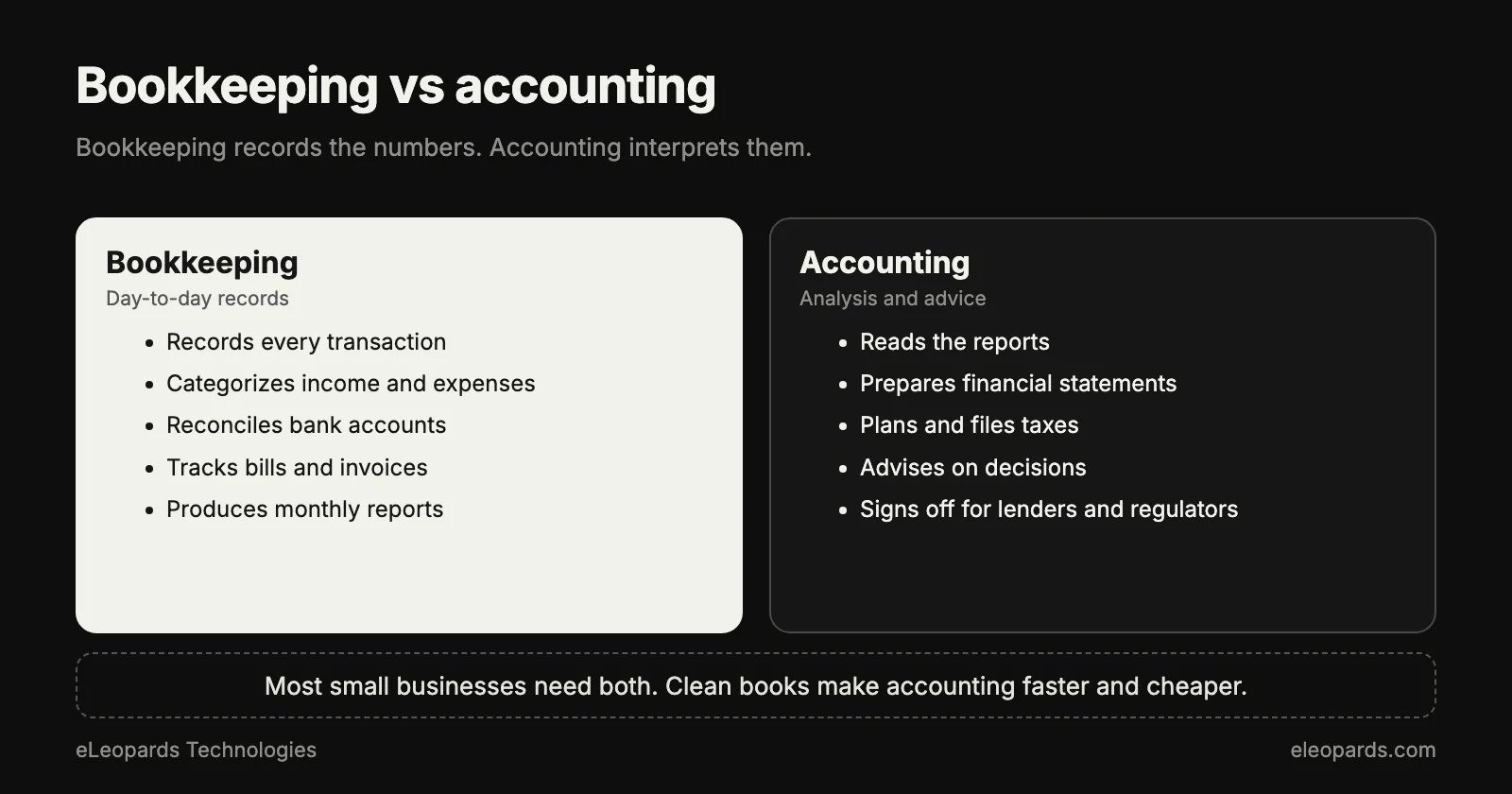
Bookkeeping covers the routine record-keeping: logging sales and expenses, categorising transactions, sending and tracking invoices, paying bills and reconciling bank accounts. The goal is a complete and accurate set of records.
What is accounting?
Accounting takes the bookkeeping records and turns them into financial statements, tax filings and advice. It includes analysing performance, planning for tax, preparing budgets and forecasts, and sometimes audits. The goal is to understand the business and make decisions.
How do they differ in practice?
- Focus: bookkeeping records the past; accounting interprets it and looks forward.
- Frequency: bookkeeping is continuous; accounting often happens monthly, quarterly and yearly.
- Output: bookkeeping produces organised ledgers; accounting produces statements, tax returns and advice.
- Skills: bookkeeping values accuracy and consistency; accounting adds analysis, tax knowledge and professional qualifications.
- Cost: bookkeeping is usually the lower-cost, higher-frequency service.
How do they work together?
Clean books make accounting faster and cheaper, because the accountant spends time on advice instead of fixing records. A common pattern is a bookkeeper who keeps the books current each month and an accountant who reviews them, files taxes and advises once or twice a year.
Which does your business need?
- Just starting and few transactions: simple bookkeeping software plus a yearly accountant.
- Growing, with employees, sales tax or inventory: ongoing bookkeeping and regular accounting advice.
- Planning to borrow, sell or invest: accurate monthly books and an accountant who prepares statements.
- Short on time: hand bookkeeping to a service and spend your hours on customers.
Where does AI fit?
AI is making routine bookkeeping faster through bank feeds, categorisation and invoice reading. Interpretation and advice still benefit from human experience. Our monthly bookkeeping checklist shows the routine tasks that tools can speed up.
Common questions
- What is the difference between bookkeeping and accounting?
- Bookkeeping records and organises transactions. Accounting interprets those records to produce statements, tax filings and advice.
- Does a small business need both?
- Most do, at different intensity: regular bookkeeping to keep records current and an accountant for tax, statements and planning.
Sources and further reading
- IRS: recordkeeping for small businesses — What records to keep and for how long
- U.S. Small Business Administration: manage your finances — Budgeting, accounting and cash flow basics
Want help with this?
Tell us what you are working on and we will reply within one business day.