
A Monthly Bookkeeping Checklist for Small Businesses
By Soniya Ali, Bookkeeping Team Member at eLeopards Technologies · 24 Sept 2026 · 4 min read
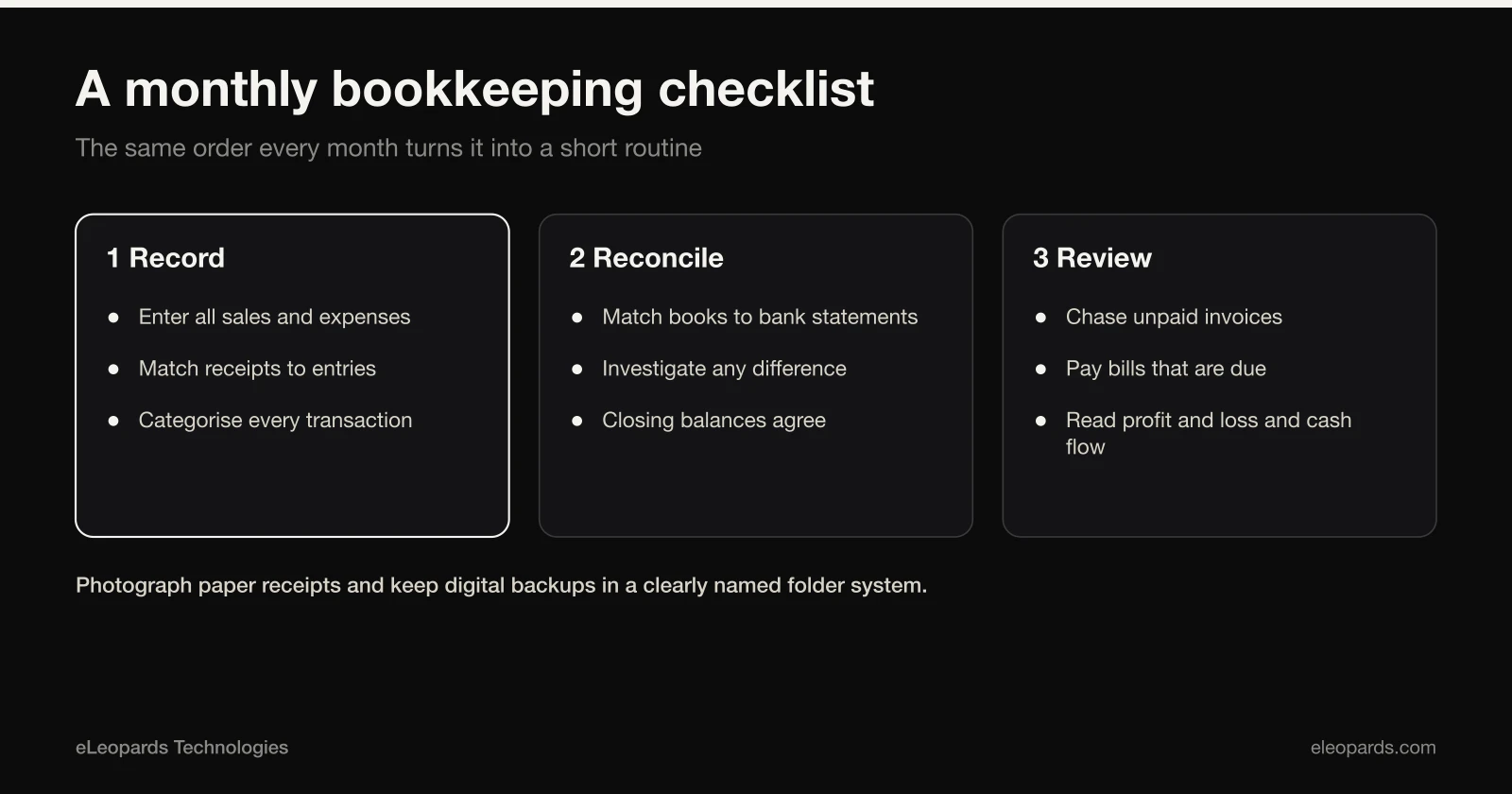
Quick answer
A repeatable month-end routine that keeps your books accurate and tax-ready.
Consistency beats intensity. A short monthly routine keeps your books clean and prevents a stressful year-end scramble.
Every month
- Record all income and expenses and attach receipts or invoices.
- Reconcile each bank, card and wallet account against its statement.
- Review unpaid invoices and follow up on overdue ones.
- Review bills due and plan payments around your cash.
- Check categories for anything misfiled.
- Run a profit and loss report and compare it with last month.
Every quarter
- Review cash-flow trends and upcoming large expenses.
- Check payroll and any tax obligations that apply to you.
- Remove or write off stale balances after confirming them.
Every year
Close the year, archive documents, and give your accountant a clean set of records. The earlier your monthly routine is in place, the shorter this step becomes.
Why a checklist beats memory
Month-end tasks are easy to skip when you are busy, and one skipped month makes the next harder. A written checklist turns bookkeeping into a short routine you can finish in the same order every time, and makes it simple to hand over to someone else if needed.
Reconciling accounts, step by step
- Download or sync the bank statement for the month.
- Match each line in your books to a line on the statement.
- Investigate anything that does not match, such as a missing receipt or a duplicate entry.
- Confirm the closing balance in your books equals the bank's closing balance.
Chasing money owed to you
Review unpaid invoices every month. Send a polite reminder for anything past its due date, and note who tends to pay late. Healthy profit on paper does not help if the cash is stuck with customers, so keeping an eye on receivables protects your cash flow.
Keeping your records safe
Store digital copies of invoices and receipts in a clearly named folder system or in your accounting software, and keep a backup. Paper receipts fade, so photograph them when you receive them. Well-organised records save a lot of time if you are ever audited or need to explain a figure.
Make it easy
Photograph receipts as you get them, use bank feeds where your software supports them, and block the same slot in your calendar each month.
Want help with this?
Tell us what you are working on and we will reply within one business day.
Start a Project