
How to Plan Blog Topics That Can Actually Rank
By Ahad Karim, Content Manager at eLeopards Technologies · 18 Oct 2026 · 5 min read
Quick answer
A simple process for choosing blog topics that match what your customers search for.
Publishing more is not the same as publishing smarter. The aim is to answer questions your customers genuinely search for, better than what already exists.
Start with customer questions
List what prospects ask on sales calls, in emails and in reviews. These are real search topics, already phrased in your customers' words.
Check search intent
Search your topic and see what ranks. If the top results are how-to guides, write a how-to guide. If they are comparison pages, a long essay will not fit the intent.
Build topic clusters
Choose one core topic, write a thorough main guide, then support it with narrower articles that link back to it. This shows depth and helps visitors move through your site.
Make each post earn its place
- Answer the question early and clearly.
- Add specifics, examples and your own experience.
- Use clear headings and short paragraphs.
- Link to related pages and add a next step.
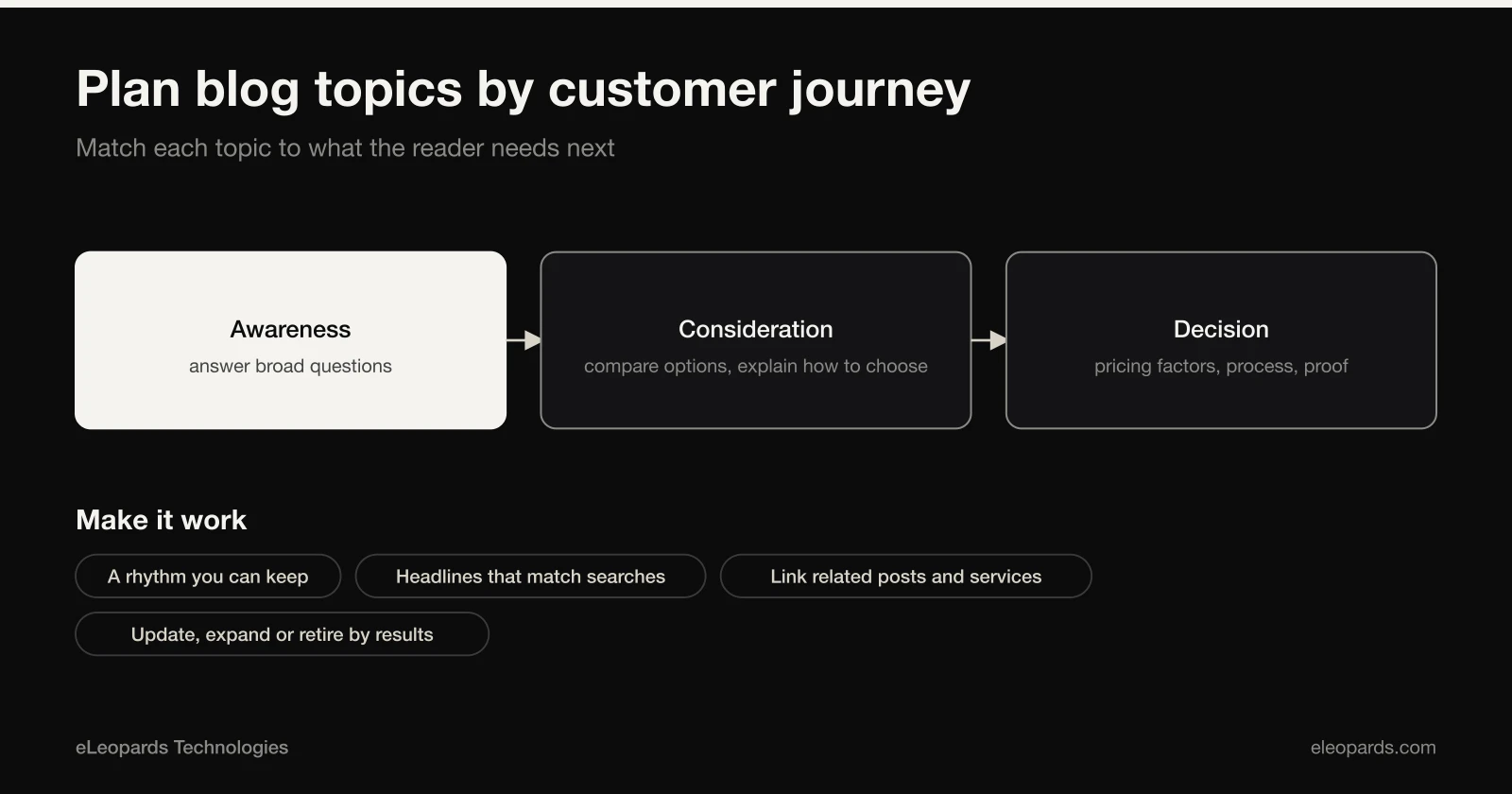
Match each topic to a stage of the customer journey
- Awareness: answer broad questions people ask before they know your service exists.
- Consideration: compare options and explain how to choose.
- Decision: show pricing factors, process and proof, such as case studies.
Plan a realistic publishing rhythm
Choose a pace you can keep, such as two good posts a month, rather than a daily schedule that collapses after a few weeks. Quality and consistency matter more than volume. Write down your topic list, assign dates, and leave time for editing.
Make each post easy to find and use
Use a clear headline that matches what people search for, break the text up with descriptive subheadings and add links to related posts and relevant service pages. End with a simple next step so a reader who found the answer knows how to contact you if they want help.
Measure what matters
Track which posts bring visitors from search, how long people stay and whether they go on to another page or contact you. Use that information to decide what to update, expand or write next, and retire topics that bring no value.
Update, do not just add
Revisit older posts every few months and refresh facts and examples. Keeping strong pages current often beats publishing something new.
Want help with this?
Tell us what you are working on and we will reply within one business day.
Start a Project